=== ps_ce_content (53) ===
Array
(
[id_ce_content] => 53
[id_employee] => 6
[id_product] => 0
[hook] => displayDescPost62
[position] => 0
[active] => 1
[date_add] => 2026-04-29 10:00:00
[date_upd] => 2026-04-29 10:00:00
)
=== ps_ce_content_lang STRUCTURE ===
id_ce_content | int unsigned
id_lang | int unsigned
id_shop | int unsigned
title | varchar(128)
content | longtext
=== ps_ce_content_lang for CE 52 (post 61) ===
Array
(
[id_ce_content] => 52
[id_lang] => 1
[id_shop] => 1
[title] => Post Blog 61
[content] =>
)
Array
(
[id_ce_content] => 52
[id_lang] => 2
[id_shop] => 1
[title] => Post Blog 61
[content] =>
)
Array
(
[id_ce_content] => 52
[id_lang] => 3
[id_shop] => 1
[title] => Post Blog 61
[content] =>
)
Array
(
[id_ce_content] => 52
[id_lang] => 4
[id_shop] => 1
[title] => Post Blog 61
[content] =>
)
Array
(
[id_ce_content] => 52
[id_lang] => 5
[id_shop] => 1
[title] => Post Blog 61
[content] =>
)
Array
(
[id_ce_content] => 52
[id_lang] => 6
[id_shop] => 1
[title] => Post Blog 61
[content] =>
)
Array
(
[id_ce_content] => 52
[id_lang] => 7
[id_shop] => 1
[title] => Post Blog 61
[content] =>
)
=== ps_ce_content_lang for CE 53 (post 62) ===
Array
(
[id_ce_content] => 53
[id_lang] => 1
[id_shop] => 1
[title] => Post Blog 62
[content] => Two identical products. The same price. One sells, the other stays on the shelf. The difference? The packaging.
In this article we will understand how each type of packaging works, when to use each one, and why more and more shops are making the switch to paper.
Paper bags: why they add more value to the product
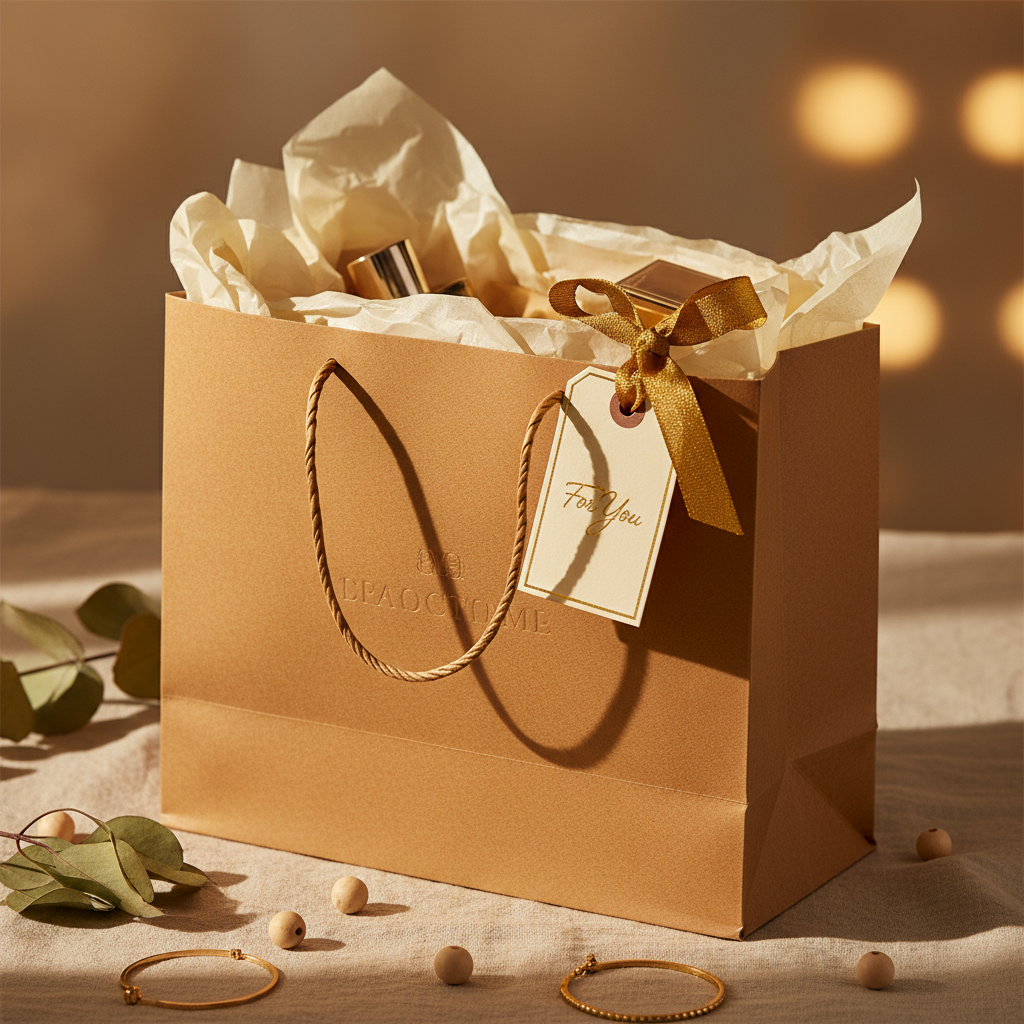
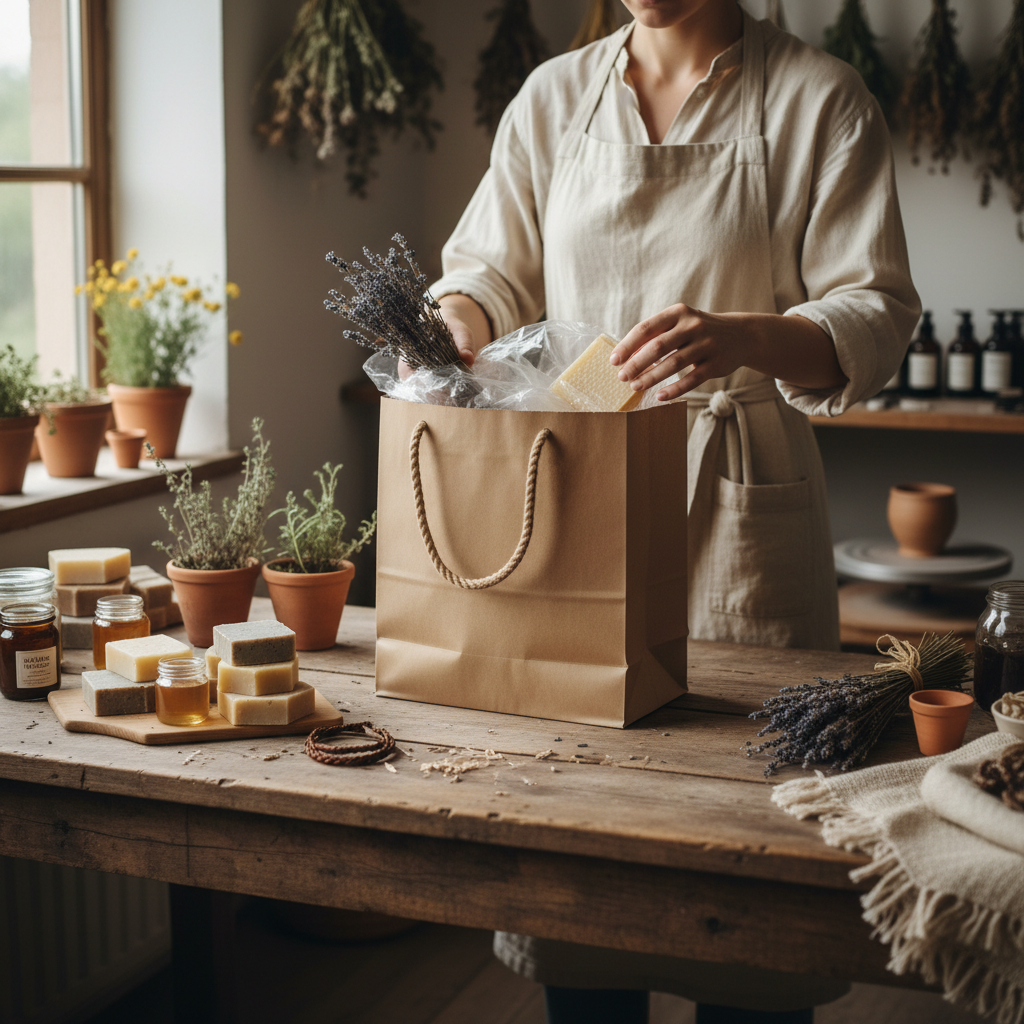
Paper bags are not just for transport. They are, very often, the first physical contact the customer has with your brand — and that moment matters.
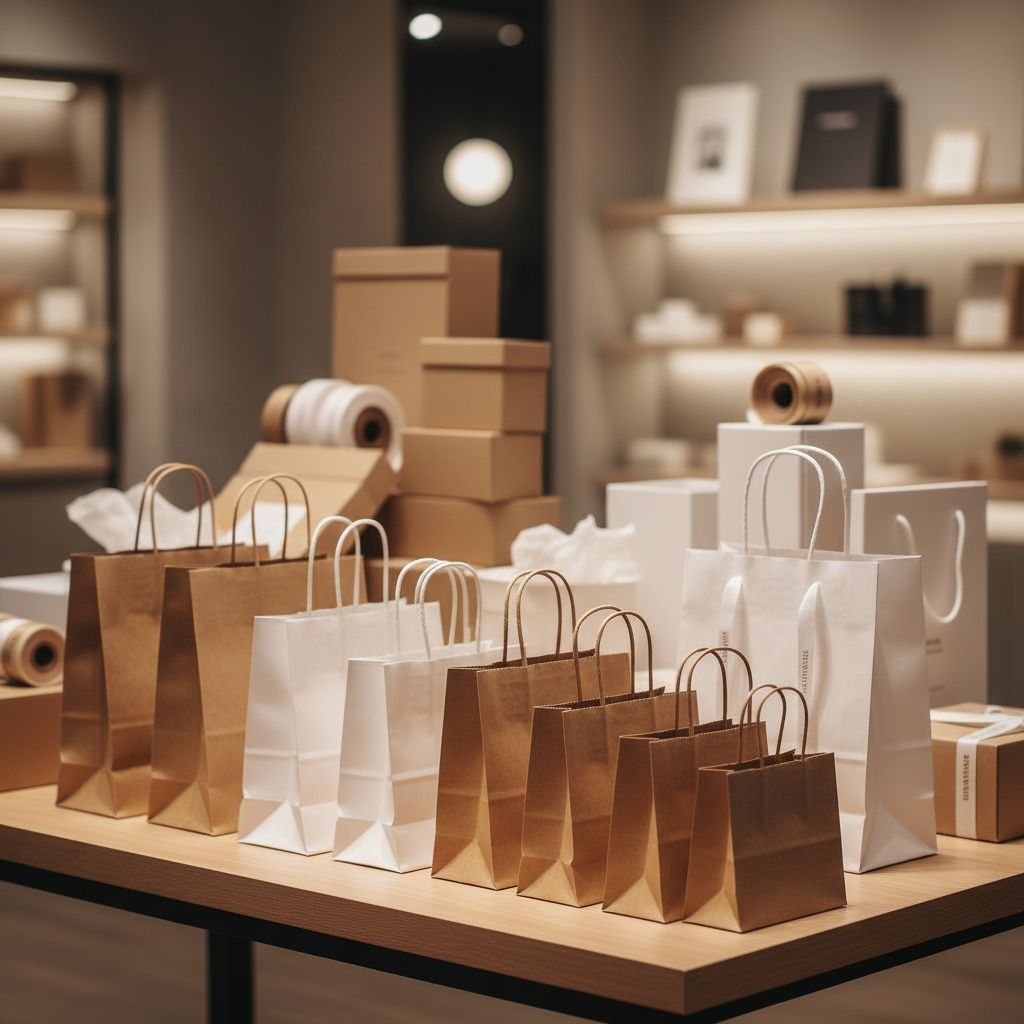
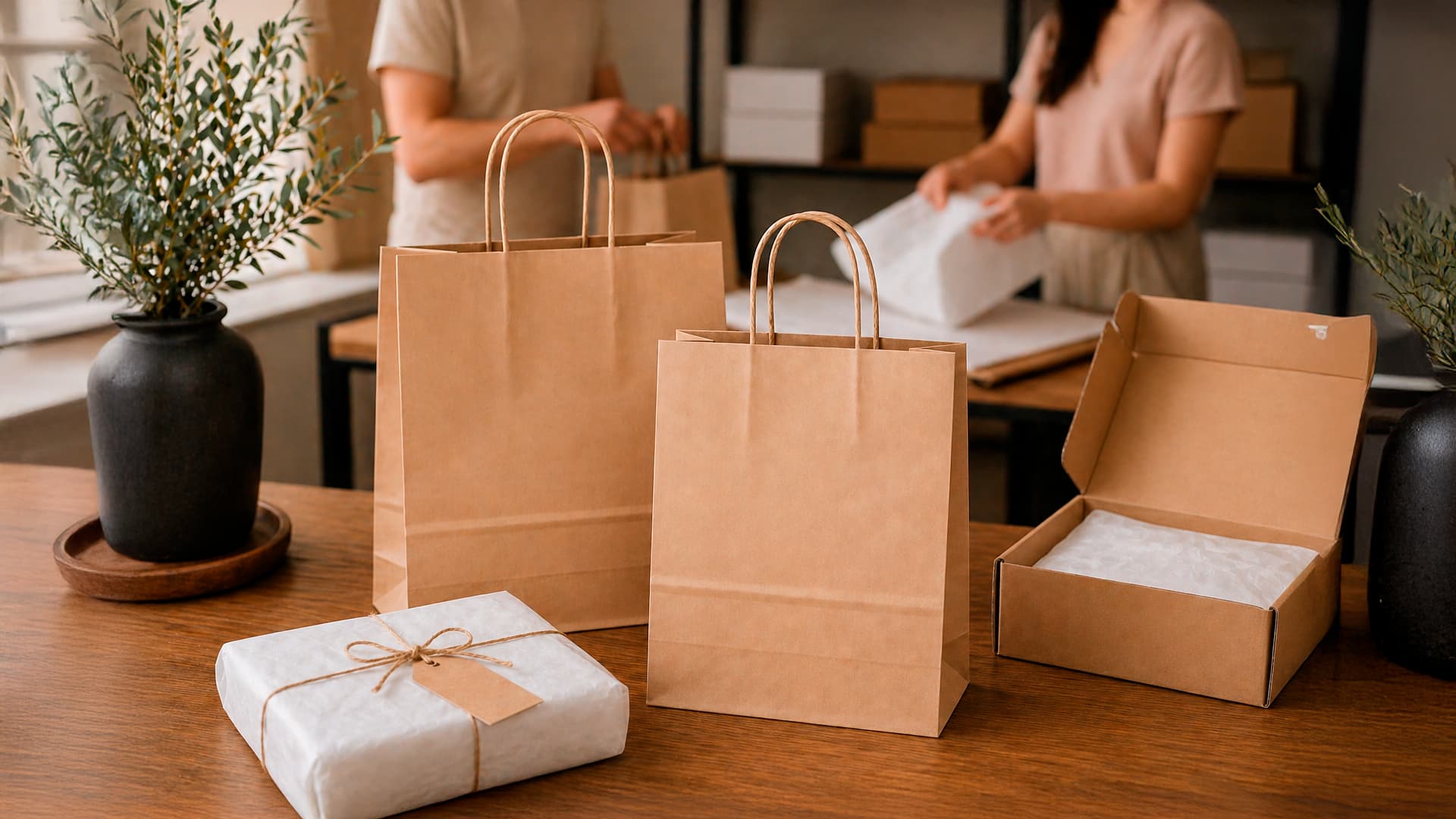
Models such as handled bags, especially twisted handle bags, bring strength and a more premium presentation to your products. They are versatile, handle weight, and work for clothing, cosmetics, gourmet food, gifts and much more.
For more specific uses, take away bags are the right choice for restaurants, cafes and any food business that wants to deliver in style. And bottle bags immediately elevate the perception of quality for wines, olive oils and gourmet products.
But there is another advantage that many businesses have not yet fully explored: customisation.
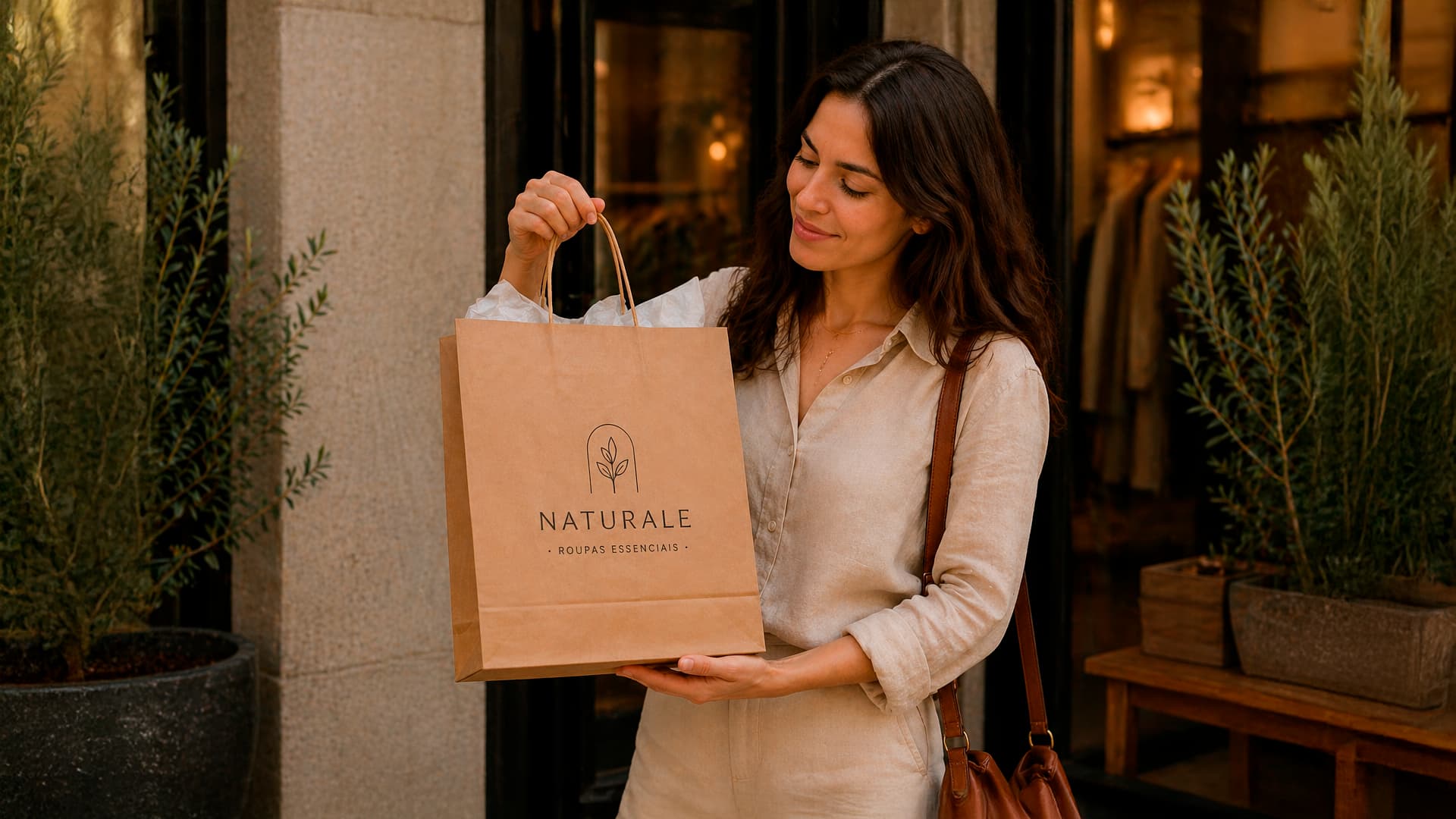
Paper bags are available in various colours — white, natural kraft, black, and other options to match your business visual identity. With a logo printed in the right colour, the bag stops being just packaging and becomes brand communication. A customer who walks out with that bag is doing free advertising wherever they go.
Whether a small clothing shop, a cosmetics brand, a bakery or a creative studio, there is a solution tailored to your business and your image.
Paper does not hide the product. It adds value — and also presents the one who sells it.
The role of plastic (as support, not the protagonist)
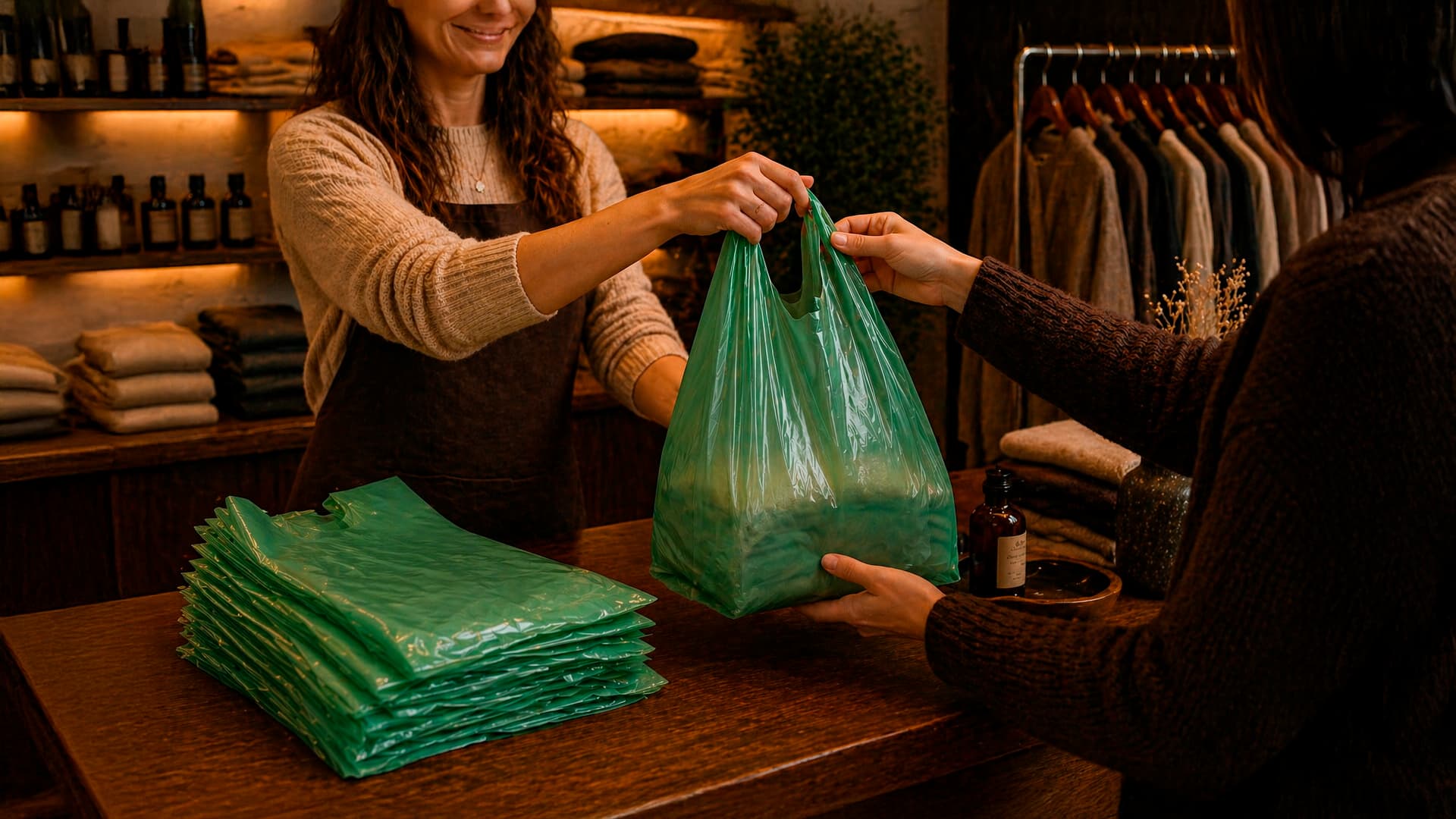
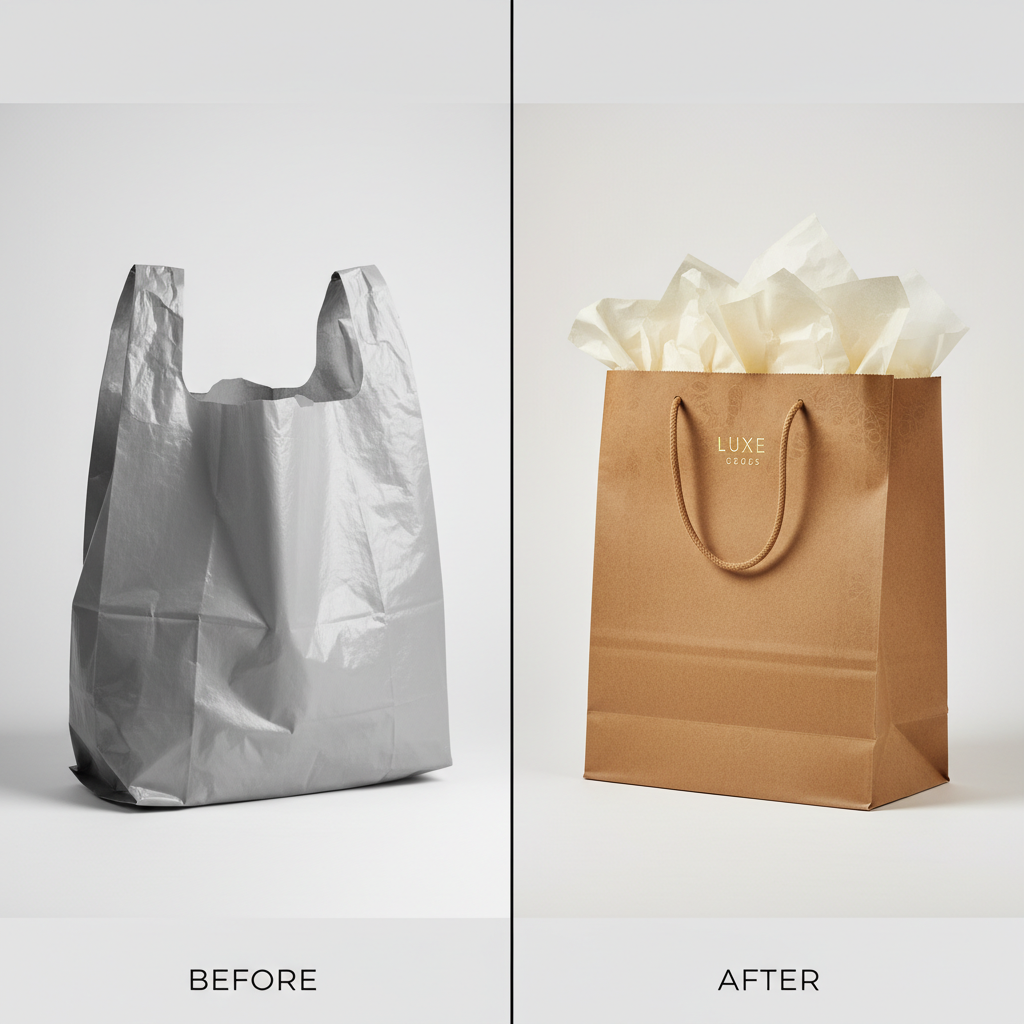
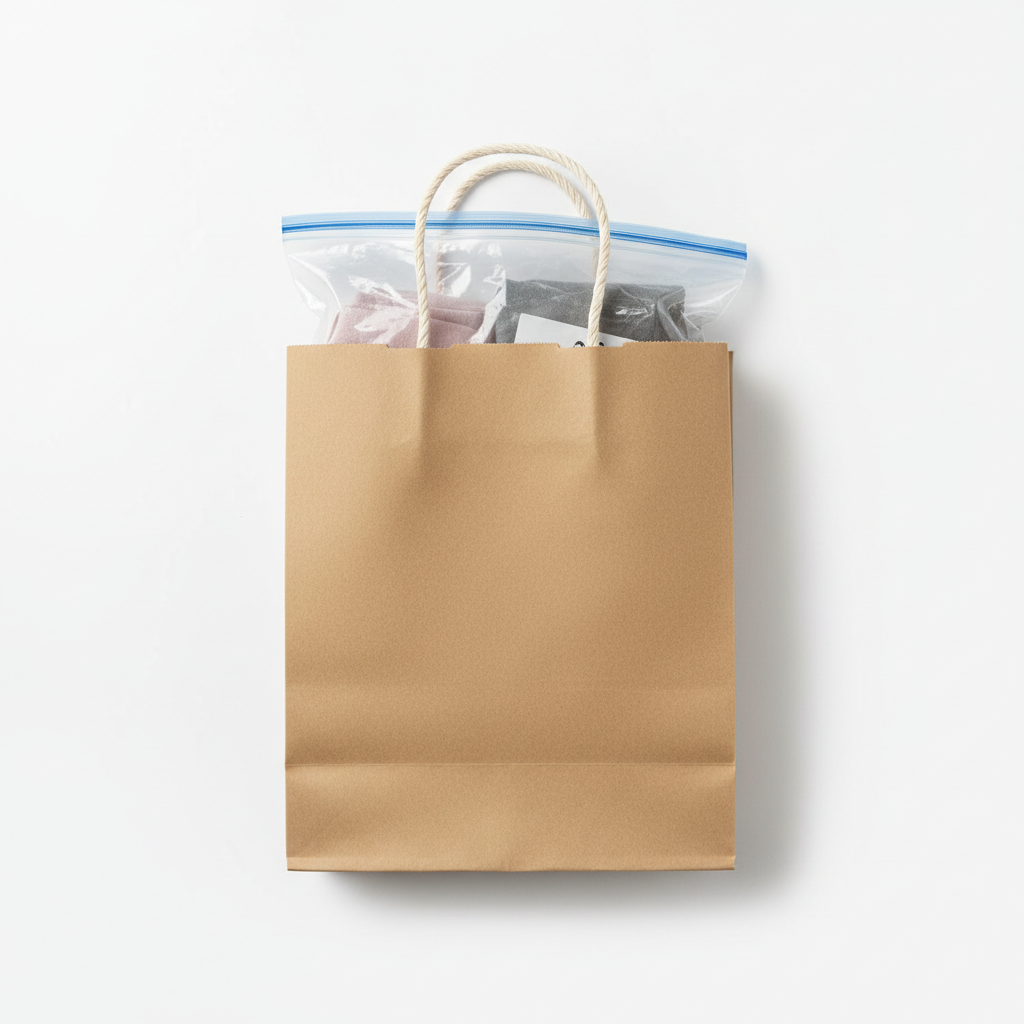
There are situations where the most important thing is to transport quickly and without complications — and that is exactly why plastic bags still make sense for many businesses.
Supermarket bags are ideal for food retail, greengrocers and convenience stores. Durable and easy to use, they adapt to all types of everyday purchases.
Die-cut handle bags, also known as bean bags, are perfect for high-turnover shops, markets and fairs. The handle cut into the bag makes delivery faster and handling quicker.
When volume is high and practicality is essential, these are the right options for your business.
In short, plastic does not sell. It only prepares.
The choice that really changes the outcome: Paper VS Plastic
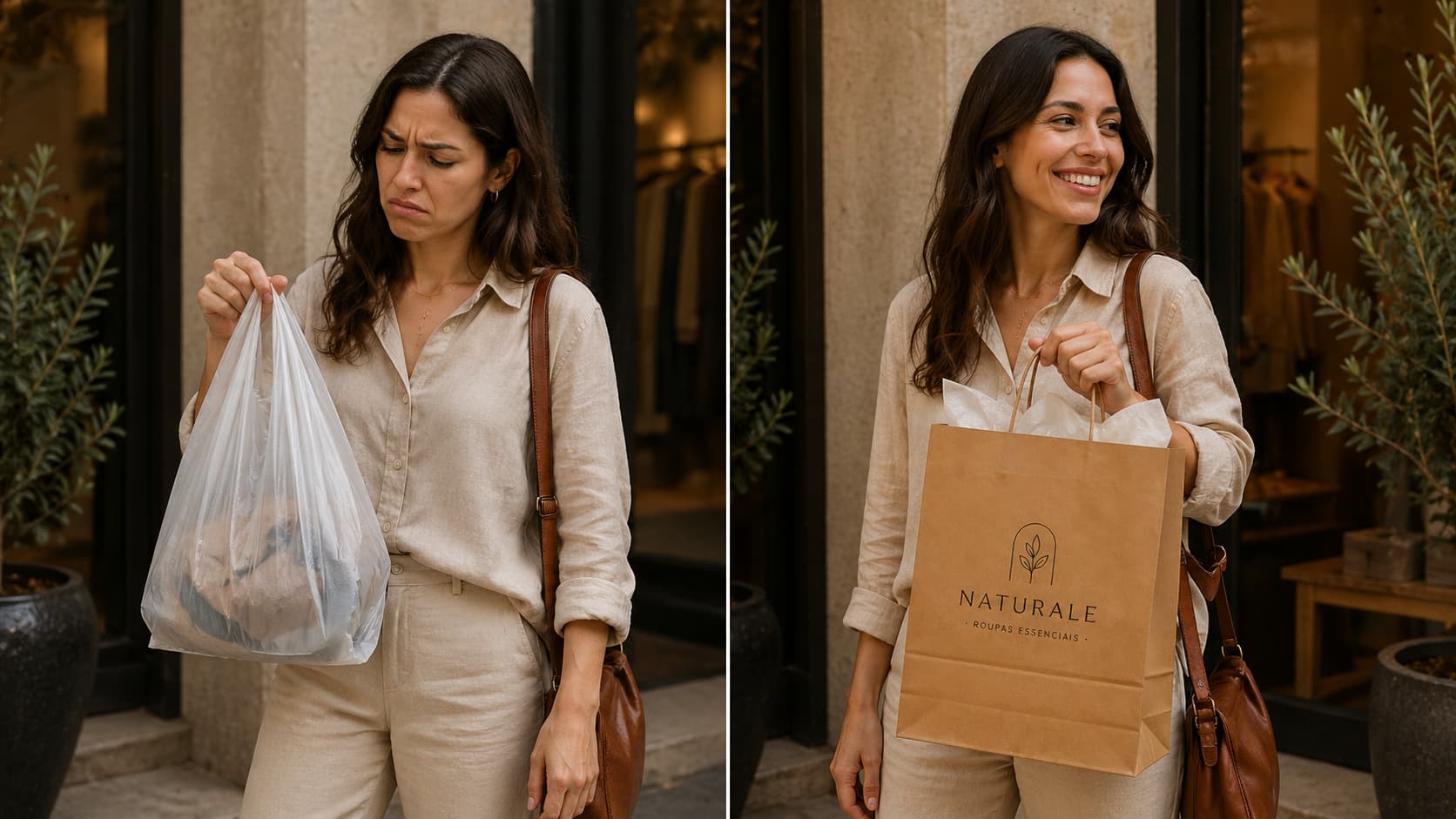
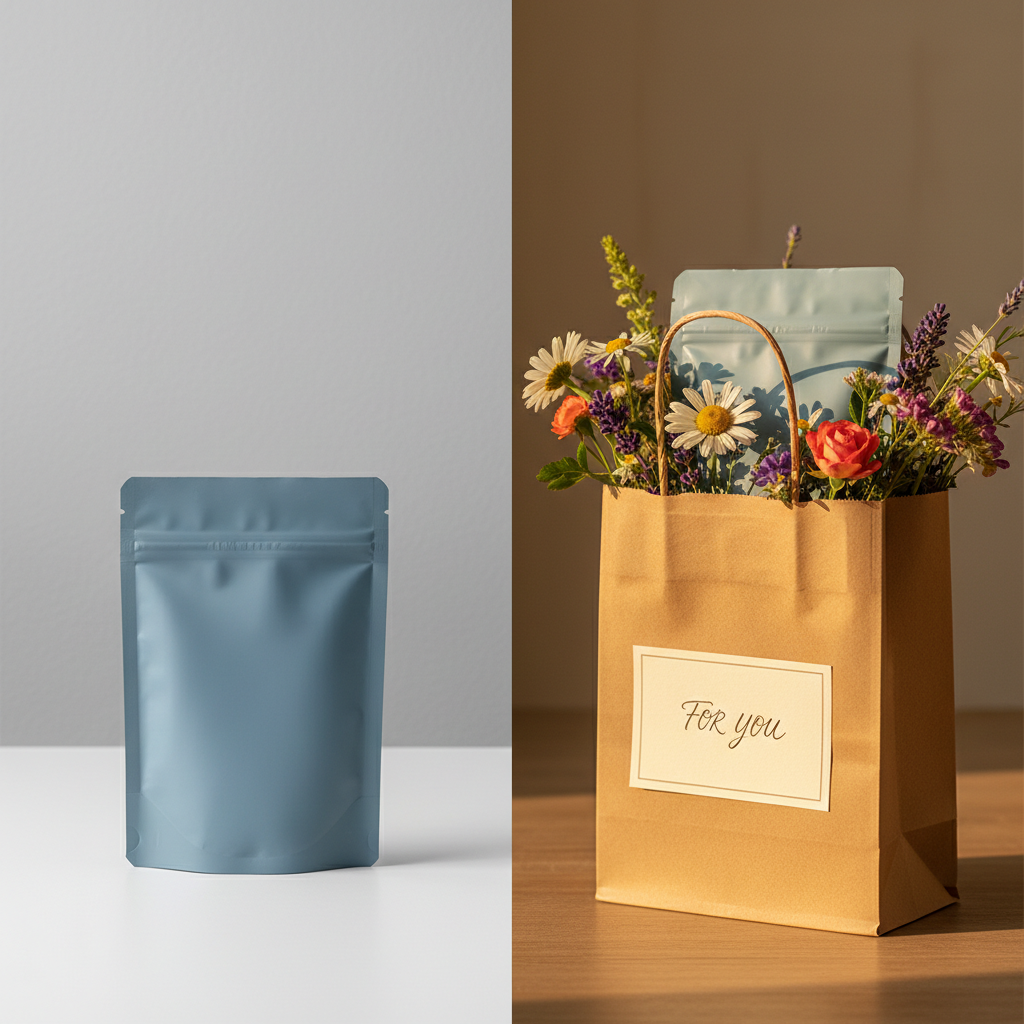
There is no wrong packaging. But there is the one that sells more — and in most cases, that is paper.
But why are more and more businesses making this switch? There are concrete reasons:
- Perceived value and brand image — a product delivered in a paper bag immediately conveys more care and professionalism. The customer associates paper with quality and sophistication even before opening the product.
- Superior customisation — paper accepts high-quality printing, vibrant colours and special finishes, making the bag a far more effective brand communication tool than plastic.
- Marketing — unlike a plastic bag, a paper bag is kept and reused. Every customer who walks out with it is doing free advertising for your business.
- Real sustainability — paper bags decompose naturally within a few months, while plastic persists in the environment for centuries. Customers are increasingly aware of this impact and value businesses that make conscious choices.
👉 Plastic stores. Paper adds value — and keeps working for your brand after the sale.
In many businesses the combination of both works well when properly applied.
Conclusion

Paper bags are replacing plastic because they make the product look better — and sell more easily.
Plastic continues to be useful as internal support: it organises, protects and prepares. But it is the paper bag that defines the customer's final perception — conveying care, reinforcing the brand and increasing perceived value even before the product is opened.
Well-chosen packaging is not a cost. It is a silent sales argument.
If your presentation still does not prioritise paper, you may be losing value without realising it — and leaving margin on the table.
Because in the end, the customer does not just buy the product. They buy the way it is presented.
See all our products, colours and sizes available on our website.
Deux produits identiques. Le même prix. L'un se vend, l'autre reste sur l'étagère. La différence ? L'emballage.
Dans cet article, nous allons comprendre comment chaque type d'emballage fonctionne, quand utiliser chacun, et pourquoi de plus en plus de boutiques font le changement vers le papier.
Sacs en papier : pourquoi ils valorisent davantage le produit
Les sacs en papier ne servent pas uniquement au transport. Ils sont, très souvent, le premier contact physique que le client a avec votre marque — et ce moment compte.
Des modèles comme les sacs à poignées, notamment les sacs à poignées torsadées, apportent résistance et une présentation plus premium. Polyvalents, ils supportent le poids et conviennent aux boutiques de vêtements, cosmétiques, alimentation gourmet, cadeaux et bien plus.
Pour des usages plus spécifiques, les sacs take away sont le bon choix pour la restauration, les cafés et tout commerce alimentaire qui souhaite livrer avec style. Et les sacs pour bouteilles élèvent immédiatement la perception de qualité pour les vins, huiles d'olive et produits gastronomiques.
Mais il y a un autre avantage que beaucoup d'entreprises n'ont pas encore pleinement exploité : la personnalisation.
Les sacs en papier sont disponibles en plusieurs couleurs — blanc, kraft naturel, noir, et d'autres options pour s'harmoniser avec l'identité visuelle de votre commerce. Avec un logo imprimé dans la bonne couleur, le sac devient communication de marque. Un client qui sort avec ce sac fait de la publicité gratuite partout où il passe.
Qu'il s'agisse d'une petite boutique, d'une marque de cosmétiques, d'une boulangerie ou d'un studio créatif, il existe une solution adaptée à votre image.
Le papier ne cache pas le produit. Il le valorise — et présente aussi celui qui le vend.
Le rôle du plastique (comme support, pas comme protagoniste)
Il y a des situations où l'essentiel est de transporter rapidement et sans complications — et c'est précisément pourquoi les sacs en plastique ont encore leur place dans de nombreux commerces.
Les sacs de supermarché sont idéaux pour l'alimentation, les épiceries et les commerces de proximité. Résistants et faciles à utiliser, ils s'adaptent à tous les types d'achats quotidiens.
Les sacs à poignées découpées, aussi appelés sacs haricot, sont parfaits pour les commerces à fort débit, les foires et les marchés. La poignée découpée rend la distribution plus rapide.
Quand le volume est élevé et la praticité essentielle, ce sont les bonnes options pour votre commerce.
En résumé, le plastique ne vend pas. Il prépare seulement.
Le choix qui change vraiment le résultat : Papier VS Plastique
Il n'existe pas de mauvais emballage. Mais il existe celui qui vend le plus — et dans la plupart des cas, c'est le papier.
Mais pourquoi de plus en plus d'entreprises font-elles ce changement ? Il y a des raisons concrètes :
- Valeur perçue et image de marque — un produit livré dans un sac en papier transmet immédiatement plus de soin et de professionnalisme. Le client associe le papier à la qualité avant même d'ouvrir le produit.
- Personnalisation supérieure — le papier accepte des impressions de haute qualité, des couleurs vives et des finitions spéciales, faisant du sac un outil de communication bien plus efficace que le plastique.
- Marketing — contrairement au sac en plastique, le sac en papier est conservé et réutilisé. Chaque client qui sort avec lui fait de la publicité gratuite pour votre commerce.
- Durabilité réelle — les sacs en papier se décomposent naturellement en quelques mois, tandis que le plastique persiste pendant des siècles. Les clients valorisent les commerces qui font des choix responsables.
👉 Le plastique stocke. Le papier valorise — et continue à travailler pour votre marque après la vente.
Dans de nombreux commerces, la combinaison des deux fonctionne bien lorsqu'elle est correctement appliquée.
Conclusion
Les sacs en papier remplacent le plastique car ils font paraître le produit meilleur — et se vendent plus facilement.
Le plastique reste utile comme support interne : il organise, protège et prépare. Mais c'est le sac en papier qui définit la perception finale du client, renforce la marque et augmente la valeur perçue avant même que le produit soit ouvert.
Un emballage bien choisi n'est pas un coût. C'est un argument de vente silencieux.
Si votre présentation ne priorise pas encore le papier, vous perdrez peut-être de la valeur sans vous en rendre compte.
Car en fin de compte, le client n'achète pas seulement le produit. Il achète la façon dont il est présenté.
Découvrez maintenant tous nos produits, couleurs et tailles disponibles sur notre site.
Dos productos idénticos. El mismo precio. Uno se vende, el otro se queda en la estantería. ¿La diferencia? El embalaje.
En este artículo vamos a entender cómo funciona cada tipo de embalaje, cuándo usar cada uno, y por qué cada vez más tiendas están haciendo el cambio al papel.
Bolsas de papel: por qué añaden más valor al producto
Las bolsas de papel no sirven solo para el transporte. Son, muy a menudo, el primer contacto físico que el cliente tiene con tu marca — y ese momento importa.
Modelos como bolsas con asas, especialmente las bolsas de asa retorcida, aportan resistencia y una presentación más premium. Son versátiles, soportan peso y funcionan para tiendas de ropa, cosmética, alimentación gourmet, regalos y mucho más.
Para usos más específicos, las bolsas take away son la opción correcta para restaurantes, cafeterías y cualquier negocio de alimentación que quiera entregar con estilo. Y las bolsas para botellas elevan de inmediato la percepción de calidad en vinos, aceites y productos gourmet.
Pero hay otra ventaja que muchos negocios aún no han explotado al máximo: la personalización.
Las bolsas de papel están disponibles en varios colores — blanco, kraft natural, negro, y otras opciones para combinar con la identidad visual de tu negocio. Con el logotipo impreso en el color correcto, la bolsa deja de ser solo embalaje y pasa a ser comunicación de marca.
Ya sea una pequeña tienda de ropa, una marca de cosmética, una pastelería o un estudio creativo, hay una solución a medida para tu negocio y tu imagen.
El papel no esconde el producto. Lo valoriza — y también presenta a quien lo vende.
El papel del plástico (como apoyo, no como protagonista)
Hay situaciones en las que lo más importante es transportar rápido y sin complicaciones — y es exactamente para eso que las bolsas de plástico siguen teniendo sentido en muchos negocios.
Las bolsas de supermercado son ideales para el comercio alimentario, fruterías y tiendas de conveniencia. Resistentes y fáciles de usar, se adaptan a todo tipo de compras del día a día.
Las bolsas de asa troquelada, también conocidas como bolsas tipo camiseta, son perfectas para tiendas con gran rotación, ferias y mercados. El asa recortada hace la entrega más ágil.
Cuando el volumen es alto y la practicidad es esencial, estas son las opciones correctas para tu negocio.
En resumen, el plástico no vende. Solo prepara.
La elección que realmente cambia el resultado: Papel VS Plástico
No existe embalaje incorrecto. Pero existe el que vende más — y en la mayoría de los casos, es el papel.
¿Pero por qué cada vez más negocios están haciendo este cambio? Hay razones concretas:
- Valor percibido e imagen de marca — un producto entregado en una bolsa de papel transmite inmediatamente más cuidado y profesionalismo. El cliente asocia papel con calidad antes de abrir el producto.
- Personalización superior — el papel aceita impresiones de alta calidad, colores vibrantes y acabados especiales, convirtiendo la bolsa en una herramienta de comunicación mucho más eficaz que el plástico.
- Marketing — a diferencia de la bolsa de plástico, la bolsa de papel se guarda y reutiliza. Cada cliente que sale con ella hace publicidad gratuita para tu negocio.
- Sostenibilidad real — las bolsas de papel se descomponen naturalmente en pocos meses, mientras que el plástico persiste en el entorno durante siglos. Los clientes valoran los negocios que hacen elecciones conscientes.
👉 El plástico guarda. El papel valoriza — y sigue trabajando para tu marca después de la venta.
En muchos negocios, la combinación de ambos funciona bien cuando se aplica correctamente.
Conclusión
Las bolsas de papel están sustituyendo al plástico porque hacen que el producto se vea mejor — y se venda más fácilmente.
El plástico sigue siendo útil como apoyo interno: organiza, protege y prepara. Pero es la bolsa de papel la que define la percepción final del cliente, refuerza la marca y aumenta el valor percibido antes de que el producto sea abierto.
Un embalaje bien elegido no es un coste. Es un argumento de venta silencioso.
Si tu presentación todavía no prioriza el papel, puede que estés perdiendo valor sin darte cuenta.
Porque al final, el cliente no compra solo el producto. Compra la forma en que se presenta.
Vea ahora todos nuestros productos, colores y tamaños disponibles en nuestro sitio.
Zwei identische Produkte. Derselbe Preis. Eines verkauft sich, das andere bleibt im Regal. Der Unterschied? Die Verpackung.
In diesem Artikel werden wir verstehen, wie jede Art von Verpackung funktioniert, wann welche verwendet werden sollte, und warum immer mehr Geschäfte auf Papier umsteigen.
Papiertüten: warum sie dem Produkt mehr Wert verleihen
Papiertüten dienen nicht nur dem Transport. Sie sind sehr oft der erste physische Kontakt, den der Kunde mit Ihrer Marke hat — und dieser Moment zählt.
Modelle wie Tragetaschen, insbesondere Papiertüten mit gedrehtem Henkel, bringen Stabilität und eine hochwertigere Präsentation. Sie sind vielseitig, tragen Gewicht und eignen sich für Bekleidungs-, Kosmetik-, Feinkost- und Geschenkgeschäfte.
Für spezifischere Anwendungen sind Take-away-Tüten die richtige Wahl für Restaurants, Cafés und Lebensmittelgeschäfte. Und Flaschentüten steigern sofort die Qualitätswahrnehmung bei Weinen, Olivenölen und Feinkostprodukten.
Aber es gibt einen weiteren Vorteil, den viele Unternehmen noch nicht voll ausgeschöpft haben: die Personalisierung.
Papiertüten sind in verschiedenen Farben erhältlich — Weiß, Natur-Kraft, Schwarz und weitere Optionen, die zur visuellen Identität Ihres Unternehmens passen. Mit dem Logo in der richtigen Farbe wird die Tüte zur Markenkommunikation. Ein Kunde, der mit dieser Tüte aus dem Geschäft geht, macht kostenlose Werbung.
Ob kleines Bekleidungsgeschäft, Kosmetikmarke, Bäckerei oder Kreativstudio — es gibt eine Lösung, die zu Ihrem Unternehmen und Ihrem Image passt.
Papier verbirgt das Produkt nicht. Es verleiht ihm Wert — und präsentiert auch denjenigen, der es verkauft.
Die Rolle von Kunststoff (als Unterstützung, nicht als Hauptakteur)
Es gibt Situationen, in denen das Wichtigste ist, schnell und unkompliziert zu transportieren — und genau dafür machen Plastiktüten in vielen Unternehmen noch Sinn.
Supermarkttüten sind ideal für den Lebensmitteleinzelhandel, Gemüsehändler und Convenience-Stores. Langlebig und einfach zu verwenden, passen sie sich allen Arten von Alltagseinkäufen an.
Stanzgriff-Tüten, auch als T-Shirt-Tüten bekannt, sind perfekt für umsatzstarke Geschäfte, Messen und Märkte. Der eingestanzte Griff macht die Ausgabe schneller.
Wenn das Volumen hoch und Praktikabilität wesentlich ist, sind dies die richtigen Optionen für Ihr Unternehmen.
Kurz gesagt: Kunststoff verkauft nicht. Er bereitet nur vor.
Die Wahl, die wirklich das Ergebnis verändert: Papier VS Kunststoff
Es gibt keine falsche Verpackung. Aber es gibt die, die mehr verkauft — und das ist in den meisten Fällen Papier.
Warum steigen immer mehr Unternehmen um? Es gibt konkrete Gründe:
- Wahrgenommener Wert und Markenimage — ein Produkt in einer Papiertüte vermittelt sofort mehr Sorgfalt und Professionalität. Der Kunde verbindet Papier mit Qualität, noch bevor er das Produkt öffnet.
- Überlegene Personalisierung — Papier nimmt hochwertige Drucke, lebhafte Farben und Sonderveredelungen an, was die Tüte zu einem weit effektiveren Markenkommunikationsmittel macht als Kunststoff.
- Marketing — im Gegensatz zu Plastiktüten werden Papiertüten aufbewahrt und wiederverwendet. Jeder Kunde, der damit aus dem Geschäft geht, macht kostenlose Werbung.
- Echte Nachhaltigkeit — Papiertüten zersetzen sich natürlich innerhalb weniger Monate, während Kunststoff jahrhundertelang in der Umwelt verbleibt. Kunden schätzen Unternehmen, die bewusste Entscheidungen treffen.
👉 Kunststoff lagert. Papier wertet auf — und arbeitet auch nach dem Verkauf weiter für Ihre Marke.
In vielen Unternehmen funktioniert die Kombination aus beidem gut, wenn sie richtig eingesetzt wird.
Fazit
Papiertüten ersetzen Kunststoff, weil sie das Produkt besser aussehen lassen — und es sich leichter verkauft.
Kunststoff bleibt als interne Unterstützung nützlich: Er organisiert, schützt und bereitet vor. Aber es ist die Papiertüte, die die abschließende Wahrnehmung des Kunden bestimmt, die Marke stärkt und den wahrgenommenen Wert steigert, noch bevor das Produkt geöffnet wird.
Eine gut gewählte Verpackung ist keine Ausgabe. Sie ist ein stilles Verkaufsargument.
Wenn Ihre Präsentation Papier noch nicht priorisiert, verlieren Sie möglicherweise Wert, ohne es zu merken.
Denn letztendlich kauft der Kunde nicht nur das Produkt. Er kauft die Art und Weise, wie es präsentiert wird.
Sehen Sie jetzt alle unsere Produkte, Farben und Größen auf unserer Website.
Due prodotti identici. Lo stesso prezzo. Uno si vende, l'altro rimane sullo scaffale. La differenza? Il packaging.
In questo articolo capiremo come funziona ogni tipo di imballaggio, quando usare ciascuno, e perché sempre più negozi stanno passando alla carta.
Sacchetti di carta: perché aggiungono più valore al prodotto
I sacchetti di carta non servono solo per il trasporto. Sono, molto spesso, il primo contatto fisico che il cliente ha con il tuo marchio — e quel momento conta.
Modelli come sacchetti con manici, in particolare i sacchetti con manico ritorto, portano resistenza e una presentazione più premium. Sono versatili, reggono il peso e funzionano per abbigliamento, cosmetica, alimentazione gourmet, regali e molto altro.
Per usi più specifici, i sacchetti take away sono la scelta giusta per ristoranti, caffè e qualsiasi attività alimentare che voglia consegnare con stile. E i sacchetti per bottiglie elevano immediatamente la percezione di qualità per vini, oli d'oliva e prodotti gourmet.
Ma c'è un altro vantaggio che molte aziende non hanno ancora sfruttato appieno: la personalizzazione.
I sacchetti di carta sono disponibili in vari colori — bianco, kraft naturale, nero e altre opzioni per abbinarsi all'identità visiva della tua attività. Con il logo stampato nel colore giusto, il sacchetto diventa comunicazione di marca. Un cliente che esce con quel sacchetto fa pubblicità gratuita ovunque vada.
Che si tratti di un piccolo negozio di abbigliamento, un brand di cosmetici, una pasticceria o uno studio creativo, esiste una soluzione su misura per la tua attività e la tua immagine.
La carta non nasconde il prodotto. Lo valorizza — e presenta anche chi lo vende.
Il ruolo della plastica (come supporto, non come protagonista)
Ci sono situazioni in cui la cosa più importante è trasportare rapidamente e senza complicazioni — ed è esattamente per questo che i sacchetti di plastica hanno ancora senso per molte attività.
I sacchetti da supermercato sono ideali per l'alimentazione, i fruttivendoli e i negozi di prossimità. Resistenti e facili da usare, si adattano a tutti i tipi di acquisti quotidiani.
I sacchetti con manico traforato, noti anche come sacchetti t-shirt, sono perfetti per negozi ad alto volume, fiere e mercati. Il manico ricavato nel sacchetto rende la consegna più rapida.
Quando il volume è alto e la praticità è essenziale, queste sono le opzioni giuste per la tua attività.
In sintesi, la plastica non vende. Prepara soltanto.
La scelta che cambia davvero il risultato: Carta VS Plastica
Non esiste imballaggio sbagliato. Ma esiste quello che vende di più — e nella maggior parte dei casi è la carta.
Perché sempre più aziende stanno facendo questo cambiamento? Ci sono ragioni concrete:
- Valore percepito e immagine di marca — un prodotto consegnato in un sacchetto di carta trasmette immediatamente più cura e professionalità. Il cliente associa la carta alla qualità prima ancora di aprire il prodotto.
- Personalizzazione superiore — la carta accetta stampe di alta qualità, colori vivaci e rifiniture speciali, rendendo il sacchetto uno strumento di comunicazione di marca molto più efficace della plastica.
- Marketing — a differenza del sacchetto di plastica, il sacchetto di carta viene conservato e riutilizzato. Ogni cliente che esce con esso fa pubblicità gratuita alla tua attività.
- Sostenibilità reale — i sacchetti di carta si decompongono naturalmente in pochi mesi, mentre la plastica persiste nell'ambiente per secoli. I clienti valorizzano sempre di più le aziende che fanno scelte consapevoli.
👉 La plastica conserva. La carta valorizza — e continua a lavorare per il tuo marchio dopo la vendita.
In molte attività la combinazione di entrambi funziona bene quando applicata correttamente.
Conclusione
I sacchetti di carta stanno sostituendo la plastica perché rendono il prodotto migliore — e si vende più facilmente.
La plastica continua ad essere utile come supporto interno: organizza, protegge e prepara. Ma è il sacchetto di carta che definisce la percezione finale del cliente, rafforza il marchio e aumenta il valore percepito ancor prima che il prodotto venga aperto.
Un imballaggio ben scelto non è un costo. È un argomento di vendita silenzioso.
Se la tua presentazione non dà ancora priorità alla carta, potresti stare perdendo valore senza rendertene conto.
Perché alla fine, il cliente non compra solo il prodotto. Compra il modo in cui viene presentato.
Guarda ora tutti i nostri prodotti, colori e taglie disponibili sul nostro sito.
Dwa identyczne produkty. Ta sama cena. Jeden się sprzedaje, drugi zostaje na półce. Różnica? Opakowanie.
W tym artykule zrozumiemy, jak działa każdy rodzaj opakowania, kiedy go używać i dlaczego coraz więcej sklepów przechodzi na papier.
Torby papierowe: dlaczego zwiększają wartość produktu
Torby papierowe służą nie tylko do transportu. Bardzo często są pierwszym fizycznym kontaktem klienta z Twoją marką — i ten moment ma znaczenie.
Modele takie jak torby z uchwytami, zwłaszcza torby z skręcanymi uchwytami, zapewniają wytrzymałość i bardziej premium prezentację. Są wszechstronne, wytrzymują ciężar i sprawdzają się w sklepach odzieżowych, kosmetycznych, gastronomicznych, z upominkami i wielu innych.
Do bardziej specyficznych zastosowań torby take away to właściwy wybór dla restauracji, kawiarni i każdej firmy spożywczej chcącej dostarczać w stylu. A torby na butelki natychmiast podnoszą postrzeganą jakość win, oliw i produktów gourmet.
Jest jednak jeszcze jedna zaleta, której wiele firm jeszcze w pełni nie wykorzystało: personalizacja.
Torby papierowe są dostępne w różnych kolorach — białym, naturalnym kraftowym, czarnym i innych opcjach pasujących do identyfikacji wizualnej Twojej firmy. Z logo wydrukowanym w odpowiednim kolorze torba przestaje być tylko opakowaniem i staje się komunikacją marki. Klient wychodzący ze sklepu z taką torbą robi darmową reklamę wszędzie, gdzie idzie.
Niezależnie od tego, czy to mały sklep odzieżowy, marka kosmetyczna, piekarnia czy studio kreatywne — istnieje rozwiązanie dopasowane do Twojej firmy i wizerunku.
Papier nie ukrywa produktu. Dodaje mu wartości — i prezentuje też tego, kto go sprzedaje.
Rola plastiku (jako wsparcie, nie protagonista)
Są sytuacje, w których najważniejsze jest szybkie i bezproblemowe transportowanie — i właśnie dlatego torby plastikowe nadal mają sens w wielu firmach.
Torby supermarketowe są idealne dla handlu spożywczego, warzywiaków i sklepów convenience. Wytrzymałe i łatwe w użyciu, dostosowują się do wszystkich rodzajów codziennych zakupów.
Torby z wyciętym uchwytem, znane też jako torby koszulkowe, są idealne dla sklepów o dużej rotacji, targów i rynków. Wycięty uchwyt przyspiesza wydawanie towaru.
Kiedy wolumen jest wysoki, a praktyczność kluczowa — to są właściwe opcje dla Twojej firmy.
Krótko mówiąc, plastik nie sprzedaje. Tylko przygotowuje.
Wybór, który naprawdę zmienia wynik: Papier VS Plastik
Nie ma złego opakowania. Ale jest takie, które sprzedaje więcej — i w większości przypadków jest to papier.
Dlaczego coraz więcej firm dokonuje tej zmiany? Są konkretne powody:
- Postrzegana wartość i wizerunek marki — produkt dostarczony w torbie papierowej natychmiast przekazuje więcej troski i profesjonalizmu. Klient kojarzy papier z jakością jeszcze przed otwarciem produktu.
- Lepsza personalizacja — papier przyjmuje wysokiej jakości druki, żywe kolory i specjalne wykończenia, czyniąc torbę znacznie skuteczniejszym narzędziem komunikacji marki niż plastik.
- Marketing — w przeciwieństwie do torby plastikowej, torba papierowa jest zachowywana i ponownie używana. Każdy klient wychodzący z nią robi darmową reklamę dla Twojej firmy.
- Prawdziwa zrównoważoność — torby papierowe rozkładają się naturalnie w ciągu kilku miesięcy, podczas gdy plastik pozostaje w środowisku przez stulecia. Klienci coraz bardziej cenią firmy podejmujące świadome wybory.
👉 Plastik przechowuje. Papier dodaje wartości — i nadal pracuje dla Twojej marki po sprzedaży.
W wielu firmach połączenie obu sprawdza się dobrze, gdy jest właściwie zastosowane.
Podsumowanie
Torby papierowe zastępują plastik, ponieważ sprawiają, że produkt wygląda lepiej — i sprzedaje się łatwiej.
Plastik nadal jest przydatny jako wewnętrzne wsparcie: organizuje, chroni i przygotowuje. Ale to torba papierowa definiuje końcowe postrzeganie klienta, wzmacnia markę i zwiększa postrzeganą wartość, zanim produkt zostanie nawet otwarty.
Dobrze dobrane opakowanie to nie koszt. To cichy argument sprzedażowy.
Jeśli Twoja prezentacja nadal nie stawia papieru na pierwszym miejscu, możesz tracić wartość, nie zdając sobie z tego sprawy.
Bo w końcu klient nie kupuje tylko produktu. Kupuje sposób, w jaki jest on zaprezentowany.
Zobacz teraz wszystkie nasze produkty, kolory i rozmiary dostępne na naszej stronie.